It is important for your horse to return to a healthy weight to prevent health issues such as laminitis. Keep in mind that being overweight can have a negative effect on a mare’s fertility. Is your mare not getting pregnant? Then make sure she reaches a healthy weight first.
Check out the forage management guide
What does the forage look like, and exactly how much does your horse get each day? Not sure? If so, we recommend having the forage analyzed and weighing the amount using a hay net and a weighing hook.
It is best to feed your horse high-quality hay or haylage with a low energy content. If necessary, you can replace some of the hay with grass seed hay or straw. Feed no more than 2 kg of this per day (for a 500 kg horse) to prevent colic.
It is best not to put your horse out to pasture (anymore) until it has regained a healthy weight. Fresh grass is high in energy.
Feed approximately 1.2% of the horse’s body weight in dry matter (the minimum is 1%). For a 500-kg horse, that amounts to 6 kg of dry matter. Feed approximately 7 kg of hay and approximately 9 kg of haylage per day. The exact amount you should feed depends on the nutritional value of the forage.
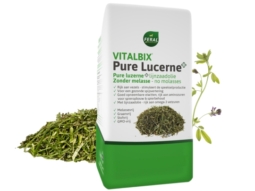
Are you planning to reduce the amount of roughage? If so, you’ll also be lowering the protein content of the diet. A protein deficiency can lead to muscle loss instead of fat loss. Therefore, replace 0.5–1.5 kg of hay with Vitalbix Pure Lucerne+ to provide extra protein (amino acids) and prevent muscle loss.
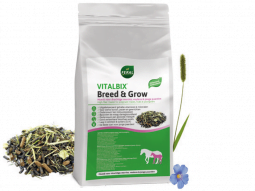
Provide your horse with all the nutrients it needs with Vitalbix Breed & Grow.
Is your mare in foal? If so, make sure she doesn’t lose weight too quickly. This can be harmful to the foal!