Find a store near you or order easily through our online store!






While grass offers many benefits, it also comes with certain risks; therefore, it’s important to consider how grazing is structured and, of course, any necessary adjustments to the hay and/or concentrate.
Did you know that many of the issues that arise in the summer (lethargy, brittle hooves) actually have a completely different cause than you might think? In fact, they’re much more often due to nutritional deficiencies than to the weather or drought.
We’ll give you step-by-step tips for all these stages: the transition, how to switch to a perfectly tailored diet, and how to avoid potential risks. This will make your summer even more enjoyable!
Getting Started – 4 Steps to Getting Used to Grass
Since your horse is no longer used to fresh grass and spring grass is rich in nutrients, it’s important to introduce it gradually. This will help you avoid health problems.
Step 1 – Initial Preparation
It’s always a good idea to take your horse out to graze on a lead before letting it into the pasture. By grazing for half an hour or an hour, your horse can get used to the new environment at a leisurely pace. If your horse has a sensitive digestive system, start this process well in advance; keep in mind that the gut flora needs several weeks to adjust.
Step 2—the real work of building up!
Be careful about how many hours your horse spends on the grass. Some horses are more sensitive than others, but build up the number of hours gradually. For some horses, this means adding half an hour each day; for others, you can extend it by an hour daily. For extra-sensitive horses, it’s better to gradually increase the number of hours of pasture time every 3 days.
Step 3 – Out to pasture
Is the time finally here for the horses to go out to pasture? If so, make sure your horse has had a chance to eat some hay in the morning. This way, its stomach will be full and your horse will (hopefully!) be less hungry.
Step 4 – Adjust other roughage
Don’t forget: your horse is getting extra roughage from the grass. So be sure to adjust the amount of hay in the stable or night paddock, especially if your horse is overweight or prone to weight gain. If your horse is out in the pasture 24 hours a day and there is plenty of grass, there is no longer a need to supplement with hay.
Yes!! The transition was a success. But we’re not there yet—watch out for shortages and surpluses!
1. Vitamin and mineral deficiencies:
Compared to the horse’s original natural environment, our pastures and soil are rather one-sided and nutrient-poor. It is therefore a persistent misconception that a horse grazing in a pasture gets everything it needs. So don’t stop or reduce your balancer! The beauty and uniqueness of a balancer is precisely that it fully supplements roughage. Grass is roughage, so even when grazing, a balancer is vitally important as a supplement. If your horse has nutritional deficiencies, you’ll notice it in things like manure consumption, his hooves, and his behavior (and there are many more signs like these).
2. Energy surplus:
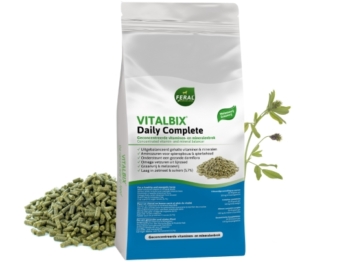
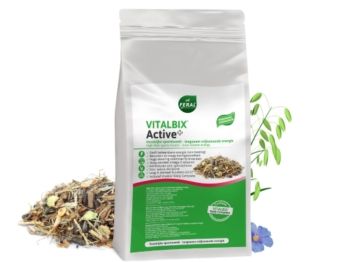
Pasture does provide extra energy. Is your horse on a full Active+ diet? If so, you may want to replace part of it with Daily Complete. Daily Complete contains all the necessary vitamins, minerals, fatty acids, and amino acids but is low in energy. This ensures your horse receives the right amount of energy and nutrients in its total diet. Instructions on how to calculate this are explained here.
3. Cut back a bit:
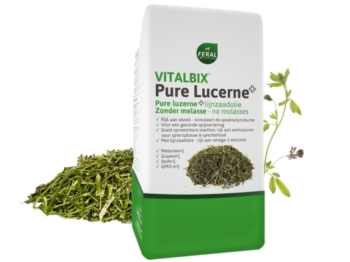
If you’re supplementing with hay, alfalfa, or a fiber mix, you may be able to reduce these amounts when your horse is out to pasture. This is because grass already provides fiber, energy, and protein. Keep in mind, however, that later in the grazing season, the grass becomes less nutritious and grows more slowly. So be sure to start increasing these supplements again in good time!
How do these types of roughage compare? It’s a bit difficult to say for grass and hay. It depends heavily on the batch of hay and the type of grass (as well as the month and weather). We therefore provide an indication here that often applies in the spring, during the initial transition to pasture. They are all high in fiber, so we’ll limit ourselves here to the differences.
Grass: in the spring, relatively high in energy (from sugars) and protein*
Hay: particularly high in energy (from sugars), but slightly lower than grass
Alfalfa: low in sugars, high in protein
Fiber mix: low in sugars, fairly high in protein
4. Omega-3 fatty acid deficiency:
Fresh grass contains approximately 4% fat per kilogram of dry matter. Fresh grass contains 15–20% dry matter. This ensures your horse doesn’t develop an omega-3 fatty acid deficiency (and trust us, you don’t want that—see the 7 reasons why! ):
- Six hours or more on the pasture—your horse will consume 145–180 grams of fat, most of which is omega-3 fatty acids. That’s generally a good amount.
- 4 to 6 hours in the pasture (limited grazing) – your horse isn’t getting enough omega-3 fatty acids from the grass! You can supplement this with 10 to 20 ml of Vitalbix Linseed Oil + Vitamin E per 100 kg, which amounts to 50 to 100 ml per day for a 500-kg horse.
- 24 hours a day in the pasture – your horse is definitely not getting enough omega-3. We recommend supplementing with 25 to 30 ml of Vitalbix Linseed Oil + Vitamin E per 100 kg; that’s about 125 to 150 ml of oil for a 500-kg horse.
Vitalbix Daily Complete, Active+, Breed & Grow, and NutriMash also contain approximately 10% flaxseed (which equates to about 40 ml of oil per kg of feed); therefore, if you feed 1 kg of Vitalbix Active+, you can subtract 40 ml of oil from the recommendation above.
Keep in mind that, with all these tips, the amount of grass you have does make a difference. Do you find it hard to figure out on your own how much of each thing you should add or reduce? We totally get that! It’s a specialized field for a reason 😉. We’re here to help. You’ll find our contact information at the bottom of this blog. Have you already requested advice? Then you can reply to that email, and we’ll tailor the advice to your needs.
Once on the grass – 4 risks & how to deal with them
Risk: laminitis
Is your horse overweight or does it have a metabolic condition such as insulin resistance,PPID(Cushing’s), or has it ever had (mild)laminitisbefore? If so, it’s especially important to be careful with the grass. Build up gradually and pay attention to the weather: in cold and sunny weather, the fructan (sugar) content rises, which can cause problems. Cloudy days are therefore more suitable for these horses. Has your horse had laminitis before? Then grazing may no longer be an option at all. In that case, keeping your horse in the paddock with a companion and roughage is a safer option.
Risk: being overweight
Is your horse prone togaining weight, or is he already a bit overweight? If so, pay extra attention to his time in the pasture. Because of the nutritional value of the grass, your horse may gain weight. So don’t forget to adjust the amount of hay you feed him. You can limit his access to grass by reducing the number of hours he spends in the pasture, using strip grazing, or possibly using a grazing mask.
Risk: thin manure
Horses with sensitive gut flora, in particular, may experience issues such as loose stools. For these horses, a gradual transition is especially important. Even when you transition slowly, a horse may still react to the change: keep a close eye on this; normally, the stools should return to normal within two weeks. During such a transition, you can always (temporarily) support the intestines with NutriMash; the prebiotic fibers provide additional support to the intestines.
Risk: shortages
When your horse goes out to pasture, it’s important to adjust its supplemental feed accordingly. Even during the grazing season, your horse can develop vitamin and mineral deficiencies. This is because our pastures are too monotonous and the soil is too poor, meaning your horse is missing essential vitamins, minerals, proteins, and fats. You can recognize this by lethargy or, conversely, nervous behavior, poor hoof quality, etc. For a full explanation, read theblog about supplemental feeding during the grazing season. Key takeaway: to keep your horse healthy, don’t stop supplemental feeding entirely, but opt for a concentrated balancer such asVitalbix Daily Complete.
* Source: Agrifirm, a major agricultural company, maintains a grass monitoring system. Since horses in the Netherlands are often grazed on pastureland, this serves as a useful indicator. We are basing this on their average grass measurement as of April 1, 2022 https://www.agrifirm.nl/nieuws/grasmonitor/
With proper preparation, the grazing season is a joy not only for your horse, but for you as well. After all, nothing beats watching a herd of horses grazing contentedly, right?
Our experts are happy to provide you with personalized nutrition advice
Every horse is unique and has different nutritional needs. That’s why our nutrition experts are happy to provide you with free, personalized nutrition advice to help you create the optimal diet for your horse(s). Do you have an overweight pony, a sport horse with a sensitive stomach, or multiple horses ranging from young to old? Our experts are happy to help you with all your nutrition questions. And with the nutrition advice form, requesting advice is very easy!