Find a store near you or order easily through our online store!





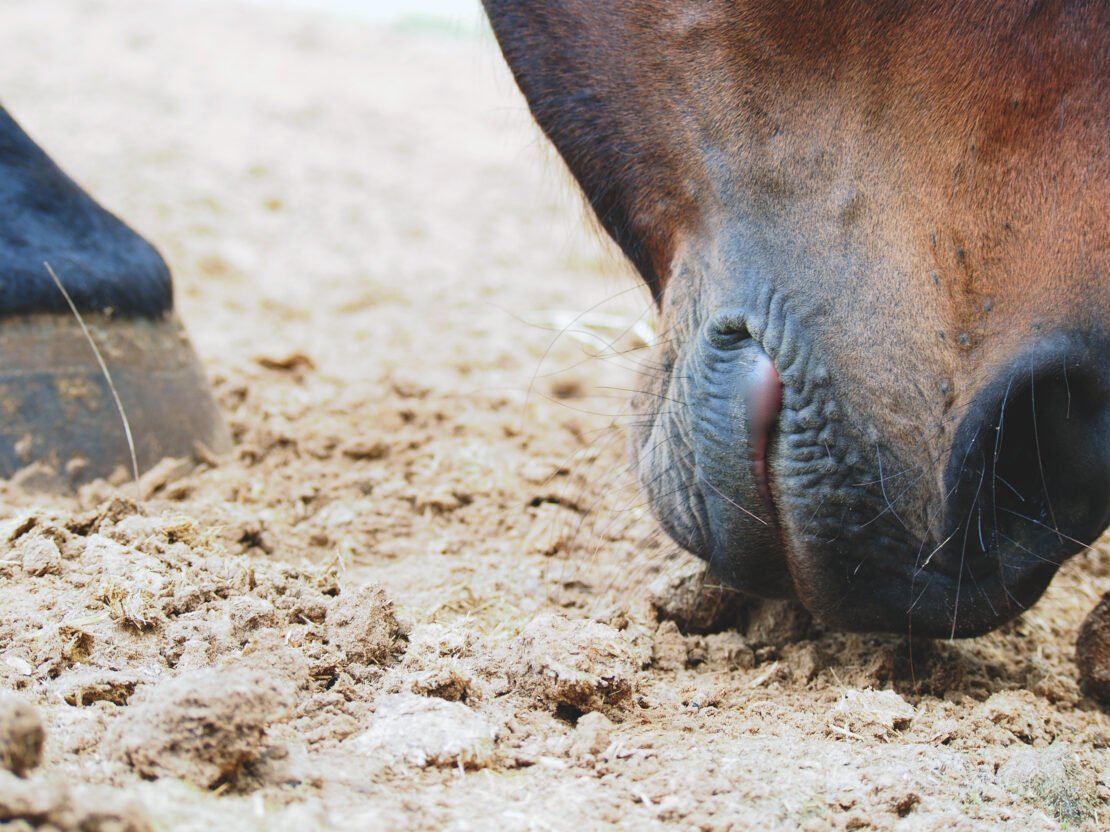
Fall/winter/spring…the season of bare pastures and the sand paddock. This is the time of year when we see the most cases of sand colic. Sand colic doesn’t develop overnight, but builds up over weeks (or even years). It’s therefore important to take preventive measures and learn to recognize the first signs of a sand problem.
HOW DOES SAND COLIC OCCUR?
"That's not hard," you might think—the name says it all: sand. Exactly. But sand ingestion isn't necessarily a problem. Every horse has a little sand in its intestines. Yours too. And most horses can live happily ever after with it. It ends up in the intestines because, while eating, small bits of soil (ground, sand) get ingested. This happens when eating from a sandy surface (paddock) or when grazing on a short pasture. Usually, this sand passes through the digestive tract fairly easily along with the food. But as soon as more sand gets stuck than is passed out, it starts to build up, and if you’re unlucky, the trouble begins. Treatment is usually possible, but in extreme cases, surgery is necessary. There are known cases where over 45 kilograms of sand were surgically removed!
So things go wrong when too much sand builds up. This usually happens in the large intestine. You’ll notice symptoms in your horse (we’ll talk about those later) only when it’s actually already too late. But fortunately, we all have an early warning system within us. Really! You, too, can tell just how high the risks are simply by looking at your horse’s surroundings.
PREVENTION TIPS
Tip 1: Take a close look at the soil composition
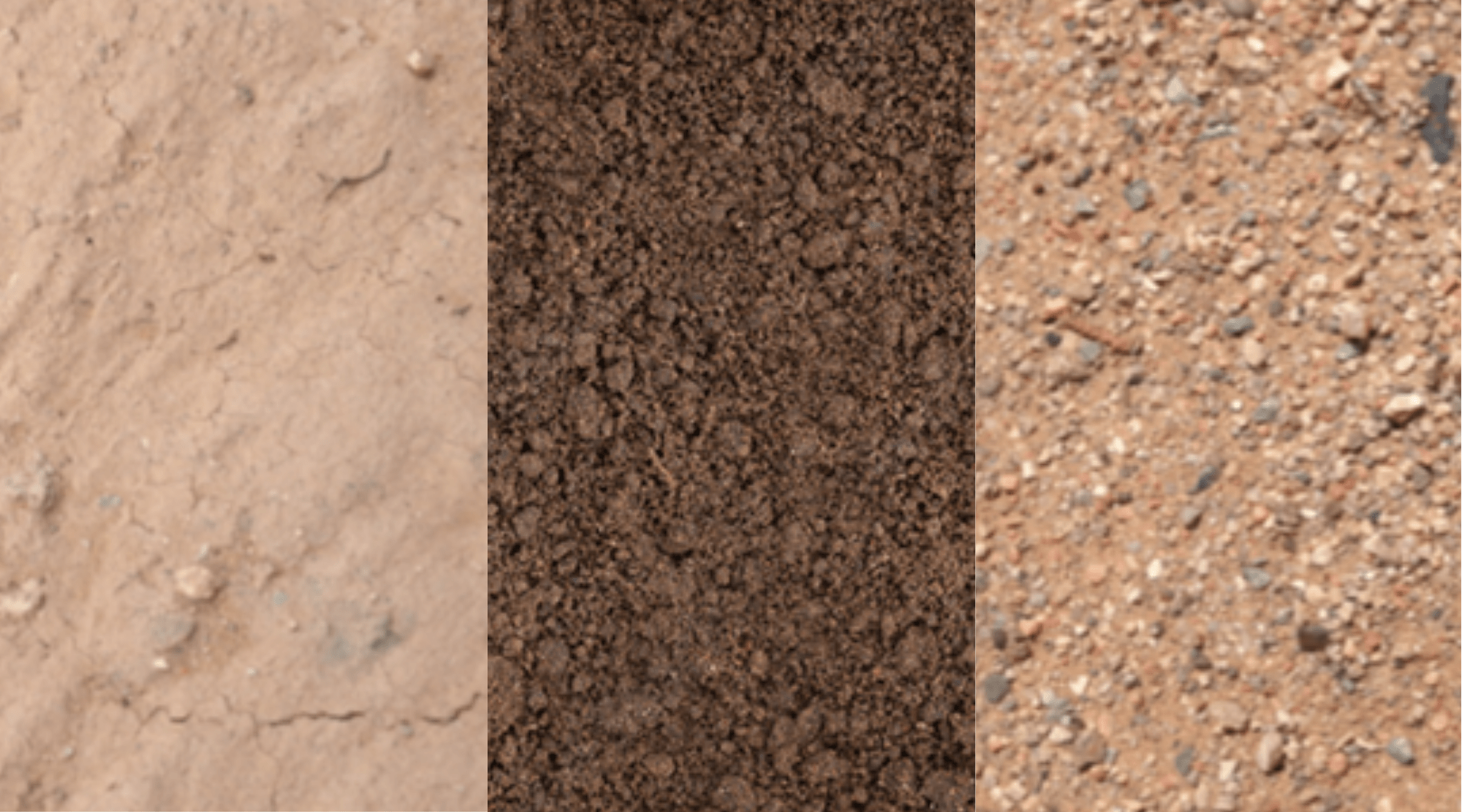
What about the particle size of the soil your horse stands on (or eats)? A rule of thumb: the larger the particles, the greater the risk. If the particles are very small, we’re talking about clay or silt. Clay soil is less likely to be ingested with the forage, and the particles that are ingested are relatively small, light, and soft. They therefore sink less quickly to the bottom of the intestines. Are they larger, loose particles? Actual sand (mud) grains? These particles are larger, sharper, and heavier. Due to their weight, they are more likely to settle at the bottom of the large intestine. Because of their sharp edges, they are also more likely to cause irritation.
In short: the coarser your soil, the higher the risk. So if your soil resembles the two images on the right, you’re at greater risk than with the one on the left. If the risk is higher, it’s best to apply a preventive sand treatment more frequently (once a month) than if the risk is lower (once every 2 or 3 months—but always keep an eye out for symptoms!).
Tip 2: Take a good look at your feeding spot
Do you feed your horse roughage in its paddock? If so, never put it directly on the sandy ground; instead, use a trough, hay rack, or hay net. Many horses are messy eaters, so that’s not the end of it. Is your horse one of those that drops half of it on the ground with every bite? That way, they’ll end up eating the leftovers off the sand a little later anyway. So it’s important to provide a surface for the feeding area: rubber mats or tiles.
Is your horse out in the pasture? Outside of the growing season (in spring, fall, and winter), the grass barely grows. The pasture often becomes bare and sandy. However, a horse will continue to graze there. It often pulls these very short blades of grass out of the ground, roots and all, bringing up quite a bit of sand in the process.
It is therefore not surprising that research has shown that 63% of severe cases of sand colic occur between October and November: during the period following the transition to the paddock or barren pasture. Sand buildup takes weeks to develop, so take preventive measures at your feeding area now!
Tip 3: Fiber also helps prevent sand colic
Let’s take a closer look at the digestive tract… specifically the lower part, the large intestine. The large intestine is a large digestive vessel where digestive enzymes break down fiber into usable particles. Only if this “vessel” is continuously well-filled with fiber can you prevent sand from settling. If you don’t consume enough fiber or don’t eat it often enough, heavy substances like sand, dirt, etc., sink to the bottom and accumulate there.
Therefore, feed as much hay as possible; in any case, feed approximately 2 kg of hay per 100 kg of body weight per day, divided into several portions (10 kg for a 500 kg horse). Is your horse overweight or prone to gaining weight? If so, it’s better to feed more low-calorie hay than a smaller amount of high-calorie hay. When selecting other feed, always choose the options highest in fiber, such as Vitalbix feed.
Want to know if the forage you’re feeding is suitable for your horse? A Quickscan can help. It allows you to measure the fiber, energy, sugars, and protein content of your forage. To do this, you can use the Vitalbix Roughage Quickscan. It provides exact results, not just a range.

Tip 4: Play outside more often
It’s not always possible, but whether you keep your horse at home or are looking for a boarding stable, prioritize the time, space, and variety of roughage (e.g., willow branches and hay in addition to grass) your horse can access outdoors. The more, the better! Exercise and a continuous, varied supply of roughage fiber help support your horse’s overall digestion. The better it works, the lower the risk of colic.
Tip 5: Water!
Whether it’s hot or freezing cold, it’s important to keep your horse well-hydrated. Research has shown that dehydration is often linked to various forms of colic. So, always make sure your horse has constant access to clean, fresh water!
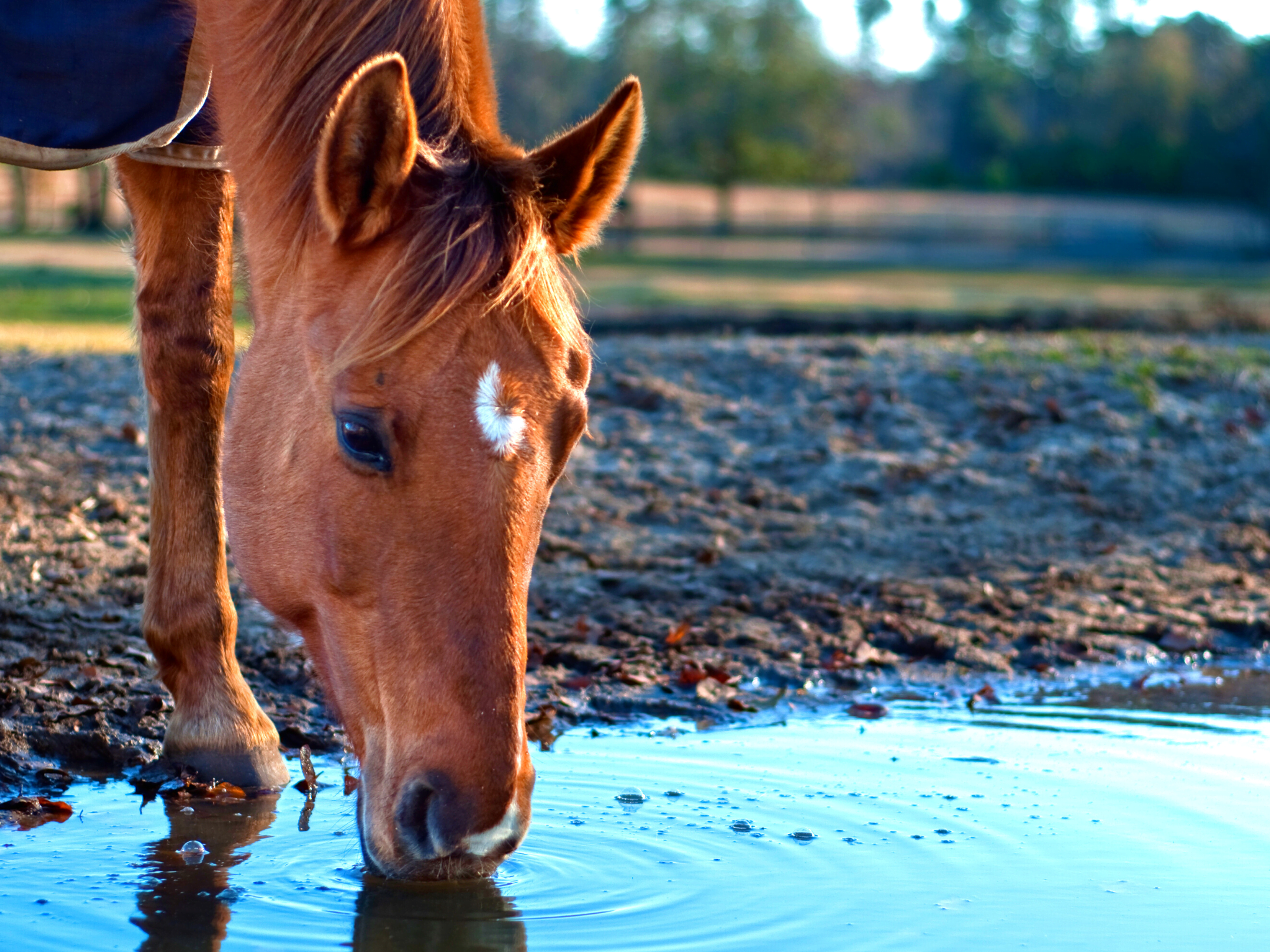
Does your horse drink from a natural pond? If so, make sure it doesn’t get too shallow. This can also cause a lot of sand to get into the water! Even if you’d rather avoid it, if this seems likely to happen, you’re better off setting up water troughs instead…
Tip 6: Preventive psyllium treatment
Depending on the risks specific to you (and your horse), it is recommended to administer a preventive treatment once every 1, 2, or at most 3 months. This helps prevent sand from accumulating. For our own horses, we do this monthly using Vitalbix PsylliumMash.
None of these tips is a miracle cure or a guarantee that your horse will never suffer from colic. But the more tips you can put into practice, the better it is for your horse’s well-being—that much is certain.
HOW CAN YOU TELL IF YOUR HORSE HAS TOO MUCH SAND IN ITS INTESTINES?
These are common symptoms:
- diarrhea / loose stools
- weight loss
- loss of appetite
- acute, chronic, or recurrent colic
- laminitis
- poor performance/lack of motivation
- Poor right flexion (due to sand in the cecum)
How can sand actually cause such problems?! After all, sand isn’t a bacterium, a virus, or some kind of perishable substance, is it? No, it isn’t, but you can probably imagine that kilos of sand grains—even if it’s not 45 kilos—can cause pain and damage. Here are a few specific examples:
According to research, diarrhea is likely caused by pressure, constriction of blood flow, and minor internal abrasions on the intestinal wall. A damaged intestinal wall absorbs nutrients and fluids less effectively. For this same reason, weight loss and lethargy may occur.
Laminitis is another consequence. Toxins (endotoxins) sometimes inadvertently enter the bloodstream due to damage to the intestinal wall. This causes or exacerbates a variety of problems, including laminitis.
If you’re concerned or if symptoms persist for too long, always consult your veterinarian. It’s also important to note that not every horse shows symptoms…there may well be a significant amount of sand in the digestive tract without you noticing it.
HOW DO YOU TEST FOR SAND IN THE INTESTINES, AND WHAT DOES THAT INDICATE?
Whether or not you notice symptoms, regular testing is always recommended. It’s actually just like testing your horse for worms. There are several ways to do this. Which method you choose isn’t the most important thing—what matters is that you do it regularly. Here’s how to test:
Method 1 – using a bag or glove
Put a handful of manure in a clear plastic bag.
Add water.
Hang it up.
Soon, the sand will settle at the bottom.
Half a teaspoon is fine, but no more.
Don't have a plastic bag? A clear sandwich bag will work too.
Method 2 – using a bucket
Take a bucket of water and two generous handfuls of manure.
Stir well.
Let it sit for 10 minutes, then stir vigorously again.
Wait 1 minute, then carefully pour out the water and manure.
Is there more than half a teaspoon of sand left behind? If so, you’ll want to take action.
And… one more time!
A horse doesn't pass sand in a nice, even stream. It only comes out occasionally. We therefore recommend testing for at least 3 consecutive days every month.
What does this mean?
It is sometimes said that testing is pointless, because almost every horse has some sand in its intestines anyway. The amount of sand detected in the test does indeed not reflect the amount of sand in the intestines, and even if no sand is found, that is no guarantee that there isn’t (too) much sand in the intestines.
So why test anyway? If you find a lot of sand in the test, you can be sure that there is too much sand in the intestines, that you need to administer a sand treatment, and that it’s best to stick to a slightly higher dosage.
It’s best to administer a preventive treatment once every 1, 2, or at most 3 months, even if you don’t test the manure. This is precisely to prevent the sand—which is always present—from building up.
Was sand detected, and did you administer a course of treatment? If so, repeat the test weekly for a while. If you’re unsure, always contact your veterinarian.
Want to learn more about manure testing? Read more here.
GIVE A SAND TREATMENT
Tip 1: Give plenty of psyllium!
When we talk about a sand-cleansing regimen, we’re almost always referring to psyllium. Psyllium seeds swell up, helping to flush out sand. Unfortunately, we often see doses that are far too low. If you’ve read prevention tip 3 above, you can imagine that a very low dose won’t do much in that large, thick colon. That is why we recommend, just like clinics worldwide, giving at least 0.5 grams (for prevention) up to 2 grams (for treatment of heavy sand buildup). The table shows the exact dosage for Vitalbix PsylliumMash.
Daily nutritional recommendations
100 grams of mash per 100 kg of body weight, once a day. For a 500-kg horse, feed 500 grams in a single serving per day. So one bag will last for 12 days (= 2 treatment courses)!
200 grams of mash per 100 kg of body weight, once a day. For a 500-kg horse, feed 1,000 grams in a single serving per day. One bag is enough for one treatment course. Repeat the treatment course if necessary, in consultation with your veterinarian.
200 grams of mash per 100 kg of body weight, twice a day. For a 500-kg horse, feed 1,000 grams in a single serving, twice a day. In total, a 500-kg horse receives 2 kilograms per day. Repeat the treatment if necessary, in consultation with your veterinarian.
Tip 2: Try Vitalbix PsylliumMash!
This has a number of advantages:
* It’s easy to administer, even for picky eaters. The sooner it’s eaten after preparation, the better it works. So a tasty sand treatment isn’t just enjoyable—it actually offers real added value!
* No mess with mixing, and ready in just 5–10 minutes.
* Good value for money: most psyllium products cost between €25 and €38 for 1 to 2.5 kg of psyllium. PsylliumMash contains 3 kg of psyllium seeds and 3 kg of mash. So the psyllium is already cheaper than average, and you get the mash (and the convenience 😉) for free! The guidance, if you’d like it, is included too… see the bottom of this page!
* It contains no alfalfa
Tip 3: In addition, always provide as much fiber and fresh drinking water as possible.
Both are effective for both prevention and treatment.
But our best advice remains: do everything you can to prevent problems. Because no matter how proud we are of Vitalbix PsylliumMash, we’d prefer that you need as little of it as possible!
Support your horse's health with Vitalbix
Give your horse a monthly sand treatment
By giving your horse a monthly preventive sand treatment, you can reduce the risk of intestinal problems such as sand colic.
Vitalbix PsylliumMash makes it easy to administer this treatment. A simple and tasty sand treatment containing 50% psyllium. Low in sugars and starch!

Our experts are happy to provide you with personalized nutrition advice
Every horse is unique and has different nutritional needs. That’s why our nutrition experts are happy to provide you with free, personalized nutrition advice to help you create the optimal diet for your horse(s). Do you have an overweight pony, a sport horse with a sensitive stomach, or multiple horses ranging from young to old? Our experts are happy to help you with all your nutrition questions. And with the nutrition advice form, requesting advice is very easy!